
Progress: real and Potemkin

I ran across this essay, Freddie deBoer offering a bet to Scott Alexander that the AI singularity isn’t coming in the next 3 years, based on a decent decent set of economic measurements:

I used to find it somewhat mind-boggling that allegedly intelligent people think we’re on the eve of some giant technological leap forward. This was going on while I was in grad school with the nanotech thing. Autonomous cars (yes google is violating my patent): same thing. Cruise is dead, Argo is dead, Otto is dead, Embark is dead, Starsky is dead, Peloton is dead, Ike is dead, Waymo Via is dead. Now it’s going on with LLM chatbots, which, while fun to use, haven’t been showing up in productivity statistics or Anthropic head counts or gross margins either.
Yet we get all these fervent believers thinking the AI apocalypse is upon us. Pay no attention to the guys who actually built the technology: muh singularity is coming! It’s been coming for what? 15 years? I figure the reason behind all this is part marketing brainwashing, and part ideology. The upper middle class has an ideology of continual progress. Most upper middle class bureaucrats only have their jobs because of their origins in the times of actual technological progress. Probably the idea of continual progress originates in some Protestant millenarian heresy. You had people like HG Wells and Isaac Asimov singing songs of the imagined future of technological progress back then when it was still obviously happening outside of marketing departments. The only science fiction writers of note these days are obese nerdoids who can’t put the bag of cookies down who thinks gzip is going to genocide us all. You’d think this would be a big old hint that continual progress is a lie, sort of like the fact that we’ve been flying around in essentially a 1947 airplane design since 1947.
Actual technological progress exists in the actual world, and makes people more productive. The B-47 was actual technological progress over the B-29. It flew faster, carried more bombs, and was more efficient in fuel, support staff and logistics. That’s why people mostly still fly around in what amounts to a fat B-47 with more efficient turbofans instead of turbojets or propeller planes. You can measure the productivity increase of B47s over B29s. Less fuel, fewer moving parts, more stuff moved through the air at a higher speed. Similarly, when we made the transition from steam engines with pistons to steam engines made of turbines, huge productivity increase. More electricity and motion from less fuel. Jaccard looms over ladies with knitting needles: big increase in productivity -more cloth from fewer workers, with a reasonably small capital outlay.
When you examine something like MUH AI APOCALYPSE the picture is considerably less clear. Yes, some companies are making do with smaller headcounts. Companies often do this. We get harbingers of doom like “Atlassian lays off 10% of its workforce“ touted as resulting from a push towards more AI use. The fact of the matter is, Atlassian has a headcount of 16000 people, for two pieces of software which a talented spergeloid could probably reproduce by himself in a few days (without using LLMs).

I was using Atlassian in 2013 when it was 700 people. The last time I used it, it was around 5,000 people, providing precisely the same experience (shitty). In fact if memory serves I was using it in 2010, when I’d estimate it had about 200 people: same software, same shitty experience. I assume over time they ended up serving more people, maybe you need a few more engineers to keep the back end working. Maybe you need more salespeople, technical support staff, managers, diversity coordinators, offices in Bangalore, people to sweep up after the salespeople and keep their booze cart up to date, tech support, catering chefs and travel agents. But the reality is they could probably have 250 people and get similar outcomes. Atlassian could go back to 2010 pricing models, make more money with the same number of customers, even lowering the prices and provide the same “service” -which, BTW, probably makes every company which uses it for bug tracking less productive and more bureaucratic than they would be using github issues bug tracking which I believe is provided for free. There is no increase in productivity visible at Atlassian, a tech company that uses computers to provide management services for other tech companies. Yet, we have numskulls kvetching about them laying off 10% of their ridiculously bloated workforce as being evidence of the AI apocalypse.
You could pick any tech company and go through the same exercise. Plot their products and headcount over time: the headcount grows with their revenues and stonk valuation, but more than anything else it grows with time. It’s Parkinson’s law, undefeated after 70+ years. That’s why we have the Solow “paradox” -computers don’t actually increase productivity, they just change the work requirements and ritual obeisances towards the latest management happy talk and object oriented database front ends.
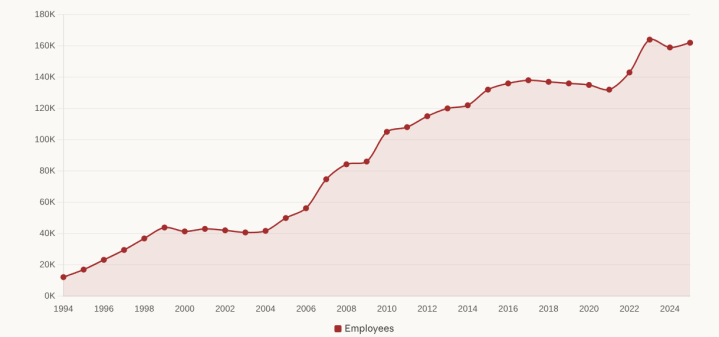
Making it personal, while claude-code and qwen-code have enabled me to do a bunch of stuff I had been wanting to do for, like, years, almost none of it has been economically productive. It very obviously hasn’t helped anybody else either, other than the guys I bought a Strix-Halo toaster from, and the assclowns at Anthropic are getting my NEET bucks. I’d have probably spent that money on wine and women. Economy is down because of AI; women and minorities (wogs make the best wine) hit hardest!
I’d love to see some actual technological and scientific progress before I drop dead; not incremental crap like better batteries, or democratization of shit the military has had for 40 years like fancy cell phones or the heads up display in my car (which is great BTW). Actual technological progress is deflationary: more things are supposed to be produced with less inputs. Cloth, for an example, was outrageously expensive until they invented mechanical things for making cloth to replace your wife’s weavings. Now a days cloth is basically just the raw material input price. If “AI” were making software as cheaply as current year cloth, it would be made for about the same price as the electricity required to make and run it. Like current year machine made cloth compared to ancient cloth, it would be better as well.
Now, if people can start using neural whatevers to successfully build general purpose robots, that would be pretty cool. Unfortunately despite all the youtube “demos” -those are all fake and gay. Remote controlled humanoid robots look like the real deal, but they have one giant and obvious tell: nobody uses remote controlled robots in production. People don’t use remote controlled robots in production because buying a $200k piece of hardware and hiring multiple $150k engineers to run it is more expensive than hiring a $35k laborer to do the same task.
It boggles my mind that allegedly intelligent people (basically everyone besides Vaclav Smil) keep falling for PT Barnum tier marketing trickery, and fail to notice the lack of productivity increases in their everyday lives and everyplace else. Truly the greatest technical achievement of the current year is marketing and propaganda.

The stats on US energy usage here are startling but line up with the (flawed) manufacturing index series: https://www.unz.com/bhua/another-way-to-compare-the-worlds-two-largest-economies/
Massive misallocation of labor in the USA, in office jobs. To paraphrase Ronnie Coleman: 'Everybody wants a big industrial base but ain't nobody want to study metallurgy.'
Currency bid to the moon because the world thinks they should park savings in the US. A giant Switzerland but with trash everywhere and particleboard housing. To do anything about it you'd need to pull a Japan and get companies to stop being so dang profitable, torch the asset values. Tough sell.
> I used to find it somewhat mind-boggling that allegedly intelligent people think we’re on the eve of some giant technological leap forward.
The majority of intelligent people lack any kind of discernment.
Most managers are pretty dumb and so when I first went into management I had the "smart" idea that we should give the obviously smarter developers more autonomy and we would end up with better results.
Of course we didn't get better results, we got significantly worse results, I almost got fired, and it became obvious to me that most smart people need to be told what to do within narrow confines or they would go completely off the rails.
The devs refused to do obvious stuff like ask the customers, who in this case were in the same building, what problems they were trying to solve.